













What is laser engraving?
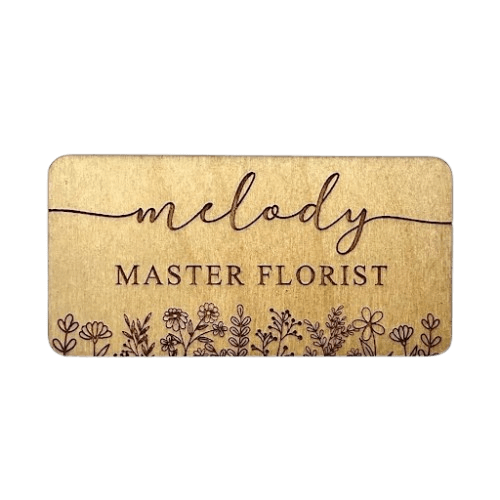
Laser engraving uses a tightly focused laser beam to burn, vaporize, or mark a material's surface, cutting the design directly into the badge. Unlike printing, nothing is added on top, the image is the material, so it can't rub off, fade, or wash away.
How does laser engraving work?
- The artwork is sent to the laser as vector paths (for cutting and fine lines) and raster images (for filled areas and text).
- A mirror and lens focus the beam to a tiny spot that moves across the surface line by line.
- Where the beam hits, it removes a coating, vaporizes a thin layer, or changes the material's color, leaving a permanent mark.
- With camera registration, the laser first looks at the part and lines the engraving up to printed artwork or the badge outline.
How permanent is laser engraving?
It is effectively permanent. Engraving physically removes or transforms the surface layer, so the mark lasts the life of the badge, even with heavy daily wear.
What can be engraved?
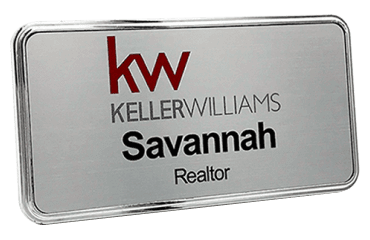
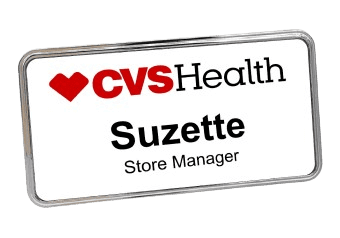
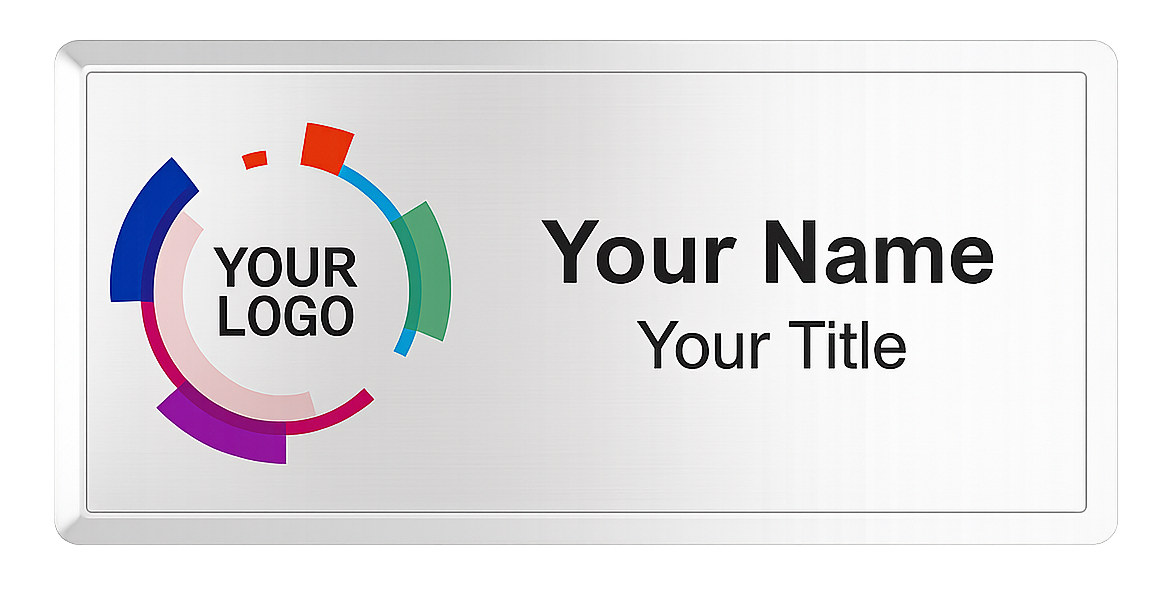
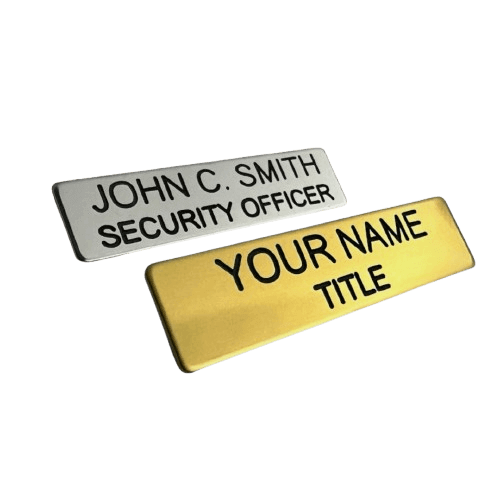
Metal (including anodized aluminum and brass-look finishes), many plastics, and real wood. Two-layer plastics reveal a contrasting core color when engraved. Lasers can also cut badges to custom shapes.
- Permanent, tactile recessed mark
- Ideal for a classic, executive look
- Works on metal, plastic, and wood
- Can engrave and cut in one pass
How is laser engraving different from UV printing?
| Factor | Laser engraving | UV printing |
|---|---|---|
| How it marks | Removes or alters the surface; nothing is added | Jets ink onto the surface, cured instantly by UV LED light |
| Color | The material's own contrast (one tone) | Full CMYK plus white ink, gradients, and photos |
| Feel | Recessed and tactile | Smooth, or raised when ink is layered |
| Durability | Permanent; cannot rub, fade, or wash off | Very high; the cured ink film resists scratches, moisture, and fading |
| Materials | Metal (including anodized aluminum), two-layer plastic, wood | Metal, plastic, wood, and most flat rigid surfaces |
| Cuts shapes | Yes, can engrave and cut in one pass | No, printing only; shapes are cut separately |
| Best for | A classic executive look, single-color names and logos | Full-color logos, brand colors, fine detail |
Many badges use both: a UV-printed full-color logo with an engraved name. More on the trade-offs in engraved vs printed name badges and what UV printing is.
Which products are laser engraved and which are UV printed?
| Product | Laser engraved | UV printed |
|---|---|---|
| Metal name badges | Yes, for the classic engraved look | Yes, for full-color logos |
| Plastic name badges | Yes, on two-layer engraving plastic (reveals the core color) | Yes, full color on any plastic |
| Wood name badges | Yes | Yes, with the natural grain showing through |
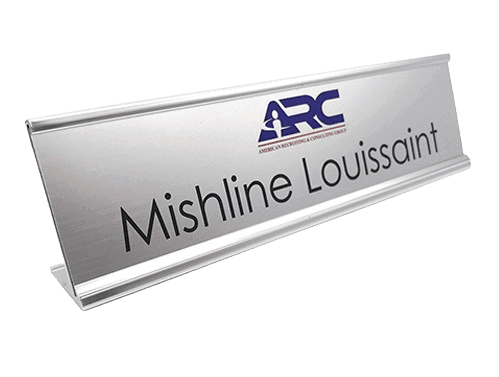
| Desk, door, and wall name plates | Yes | Yes |
| ADA Braille signs | No; Braille is CNC-pressed beads | Yes, raised UV-printed Braille and tactile text |
| Custom-shaped badges | Laser cuts the outline | Printed, then cut to shape |
NameBadge.com runs Trotec laser engravers with camera registration, which aligns the engraving precisely to pre-printed artwork or badge shapes, so engraved text sits exactly where it should. Everything is made in-house across our two US plants. Explore engraved metal badges.
Like our answers?
Make NameBadge your preferred source on Google
One tap puts a preferred badge on our answers in your Google Search & AI results. No account, no sign-up.