


















Does my business need ADA signs?
ADA signage rules apply to signs that identify permanent rooms and spaces in facilities covered by the Americans with Disabilities Act, which includes most businesses open to the public and commercial workplaces. If a sign names a space that will not change, it generally must be a tactile sign with raised characters and contracted Grade 2 Braille under ADA Section 703.
Which signs typically must be ADA compliant?
- Restrooms and their entrances
- Exits, stairwells, and exit routes
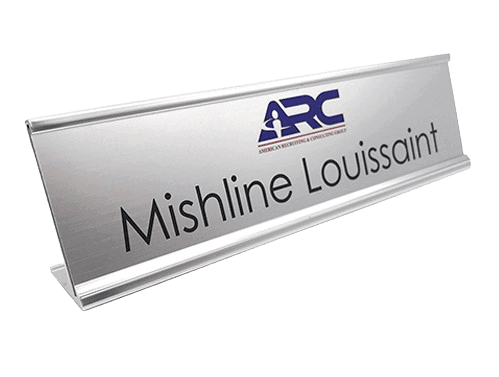
- Permanent room and office identification
- Room numbers and floor identification
Which signs are usually exempt?
- Temporary signs (up to 7 days)
- Building directories and menus
- Purely directional or informational signs (these still follow visual-character rules but do not need Braille)
- Company names and logos
What makes a sign compliant?
Raised characters 1/32 inch minimum above the background, sans-serif fonts, non-glare finish, color contrast, Grade 2 Braille, and mounting at 48 to 60 inches on the latch side of the door. Requirements can vary by state and local code, so confirm specifics for your jurisdiction. This is general guidance, not legal advice.
NameBadge manufactures ADA-compliant signs in-house in the USA with Braille produced two ways to code. See our ADA and office signs or request a quote.
Like our answers?
Make NameBadge your preferred source on Google
One tap puts a preferred badge on our answers in your Google Search & AI results. No account, no sign-up.