
















Do you make ADA-compliant name badges and tactile signs?
Most buyers asking for an "ADA name badge" actually need ADA-compliant signage, because the ADA's raised-character and Braille requirements apply to permanent signs, not to a badge pinned to a uniform. Here is how that works and what we make.
What the ADA actually requires
Under the 2010 ADA Standards Section 703, signs that identify a permanent room or space must have raised (tactile) characters plus contracted Grade 2 Braille, a non-glare finish, and high contrast. Occupant name plates that change and company logos are specifically exempt, which is why a worn name badge is generally not subject to the tactile/Braille rule. This is general information, not legal advice, so confirm any state or local code for your site.
What we manufacture to code
- ADA Grade 2 Braille signs - restroom, exit, stairwell, and room-identification signs, produced two ways in-house: CNC-pressed raised Braille beads or raised UV-printed Braille, both built to Section 703.
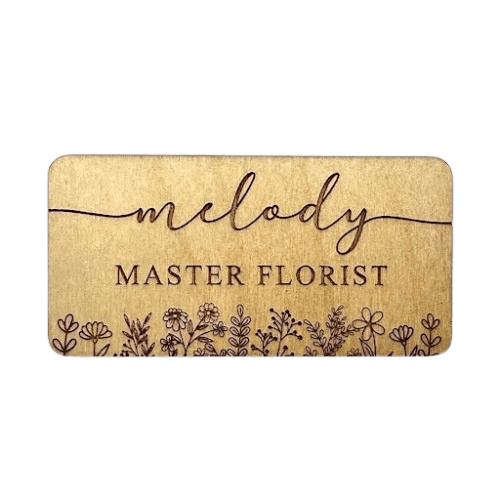
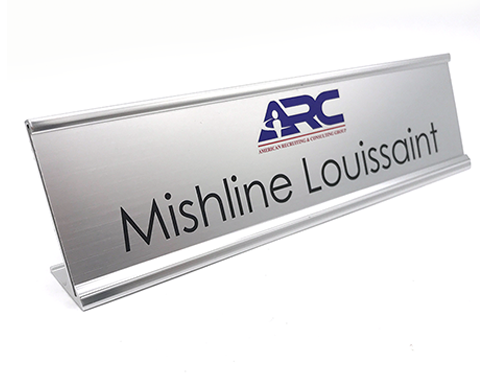
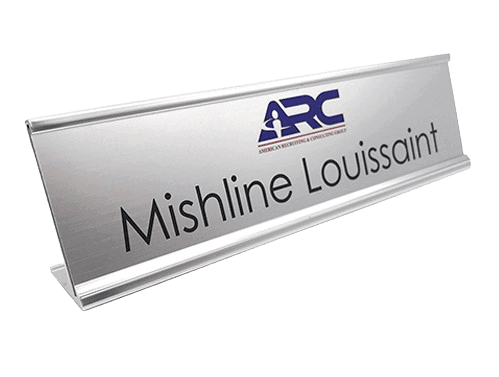
- Office, door, and desk name plates - including tactile door signs where a room must be identified to code.
- Wayfinding and pictogram signage - visual-rule directional signs and pictogram sets.
What about Braille on a worn badge?
If your organization specifically wants raised or Braille characters on a wearable name badge (beyond standard printed or engraved text), contact us first and we will confirm whether we can produce it for your order before you buy.
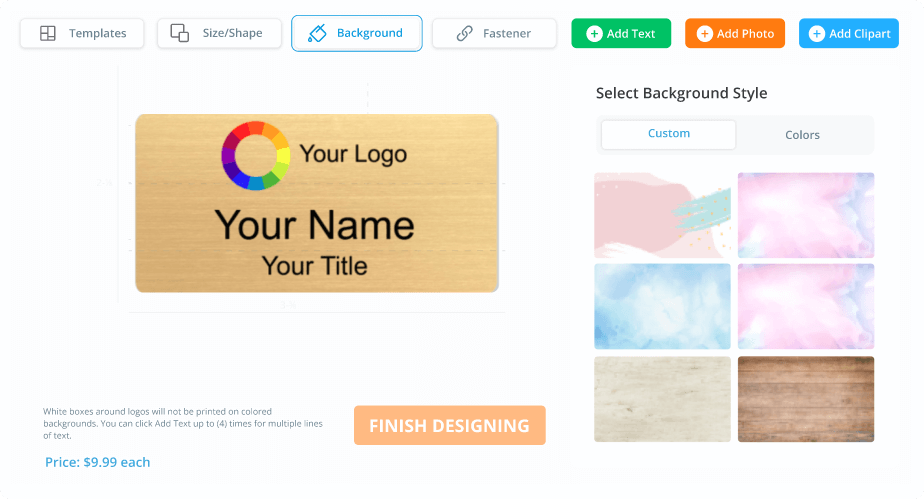
Spec compliant signage on our ADA and office signs page or name plates, design a standard badge in the free design tool, or request a quote for a full set. Made in-house in the USA to Section 703.
Like our answers?
Make NameBadge your preferred source on Google
One tap puts a preferred badge on our answers in your Google Search & AI results. No account, no sign-up.